When a delivery of structural hollow sections arrives on-site, the documentation should match the material, and the material should match the purchase order. That sounds straightforward, but it breaks down more often than it should — wrong grade, misread markings, or paperwork that refers to one heat number while the bundled pipe has another. Knowing what to look for when you receive ASTM A500 steel tubing is the difference between catching a substitution before it gets installed and discovering it after a failed inspection.
What ASTM A500 markings look like
ASTM A500 tubing is required by the standard to be permanently marked with the following information: the manufacturer’s name or mark, the ASTM designation (A500), the grade (A, B, C, or D), the heat number for traceability, and whether the tubing is hot-formed or cold-formed.
These markings appear on the tube itself, not just on attached tags or bundling labels. On round tubing, they’re typically stenciled or roll-stamped along the length. On rectangular and square HSS, markings usually appear on one of the flat faces. On smaller sections, the markings may be compressed and require attention to read clearly.
The grade letter is the most important field marking to verify against the purchase order. Grade B and Grade C are the most commonly specified in structural applications. A delivery of Grade A material against a Grade B specification is a non-conformance — Grade A has a lower minimum yield strength (39 ksi versus 46 ksi for Grade B) and is not interchangeable in designs that rely on the Grade B yield value.
Checking the mill certificate
Every delivery of ASTM A500 tubing should be accompanied by a mill test report (MTR) that documents the chemical analysis and mechanical properties of the heat. The MTR is the traceable record linking the physical material to the test data the manufacturer produced.
On delivery, check that the heat number on the MTR matches the heat number marked on the tube. If bundles are mixed from multiple heats, the delivery should include an MTR for each heat represented. A single MTR for a mixed delivery is inadequate — you can’t tell which test data applies to which tubes without heat traceability.
The MTR should confirm that the mechanical properties meet the ASTM A500 minimums for the specified grade. For Grade B: minimum yield strength 46 ksi, minimum tensile strength 58 ksi. For Grade C: minimum yield strength 50 ksi, minimum tensile strength 62 ksi. If the MTR shows values at or just above those minimums, the material is conforming; it doesn’t need to be above by any particular margin.
Dimensional verification at the point of receipt
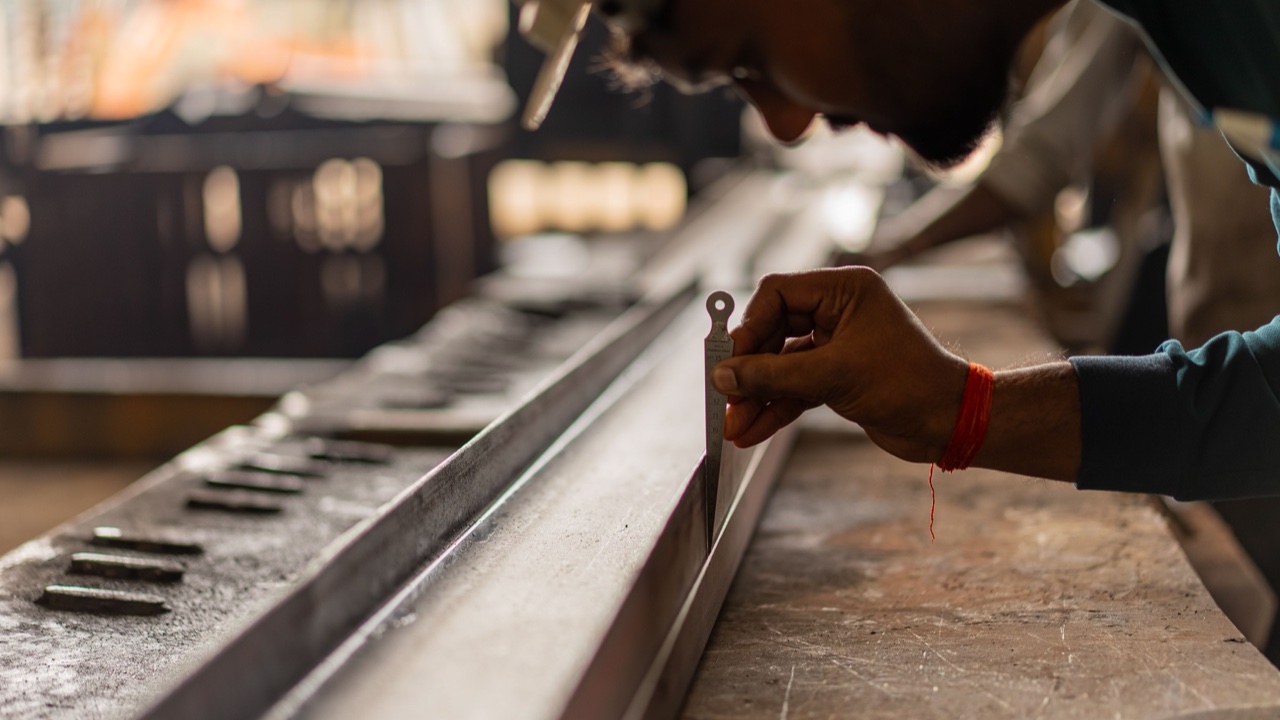
ASTM A500 specifies tolerances for outside dimensions, wall thickness, straightness, and squareness of corners on rectangular sections. A receiving inspection that includes dimensional checks on a sample of delivered material catches production issues that paperwork alone won’t reveal.
For wall thickness, ASTM A500 allows a tolerance of minus 10% of the nominal wall. A nominal 0.250-inch wall can be as thin as 0.225 inches and still conform. This tolerance is tighter than some other structural tubing standards, but it does allow meaningful variation. If wall thickness matters for your application — connection design or corrosion allowance — spot-checking with a calibrated caliper or UT gauge on received material is worthwhile.
For outside dimensions on rectangular and square HSS, ASTM A500 allows ±0.5% of the nominal outside dimension or 0.020 inches, whichever is greater. Significant deviation beyond those limits is a basis for rejection.
Common delivery problems to watch for
Mixed grades in a bundle: bundles from a steel service center sometimes contain sections cut from multiple source heats with different grades. Each piece should be individually marked. If markings are worn or missing, the material’s grade identity is uncertain.
Wrong form: ASTM A500 covers cold-formed tubing. ASTM A501 covers hot-formed tubing. These specifications have different manufacturing requirements. The delivered form should match the specified standard, and the markings should reflect it.
Grade substitution: substitution of a lower grade “because it’s what was in stock” is common in supply disruptions. A supplier proposing a substitution should provide documentation showing that the substitution is acceptable for the intended application — that’s an engineering decision, not a purchasing one.
Verifying received ASTM A500 tubing systematically — markings, MTR traceability, spot dimensional check — takes a fraction of the time required to resolve problems after installation. The receiving inspection is the point where problems can still be addressed without structural consequences.